Panang Curry Paste
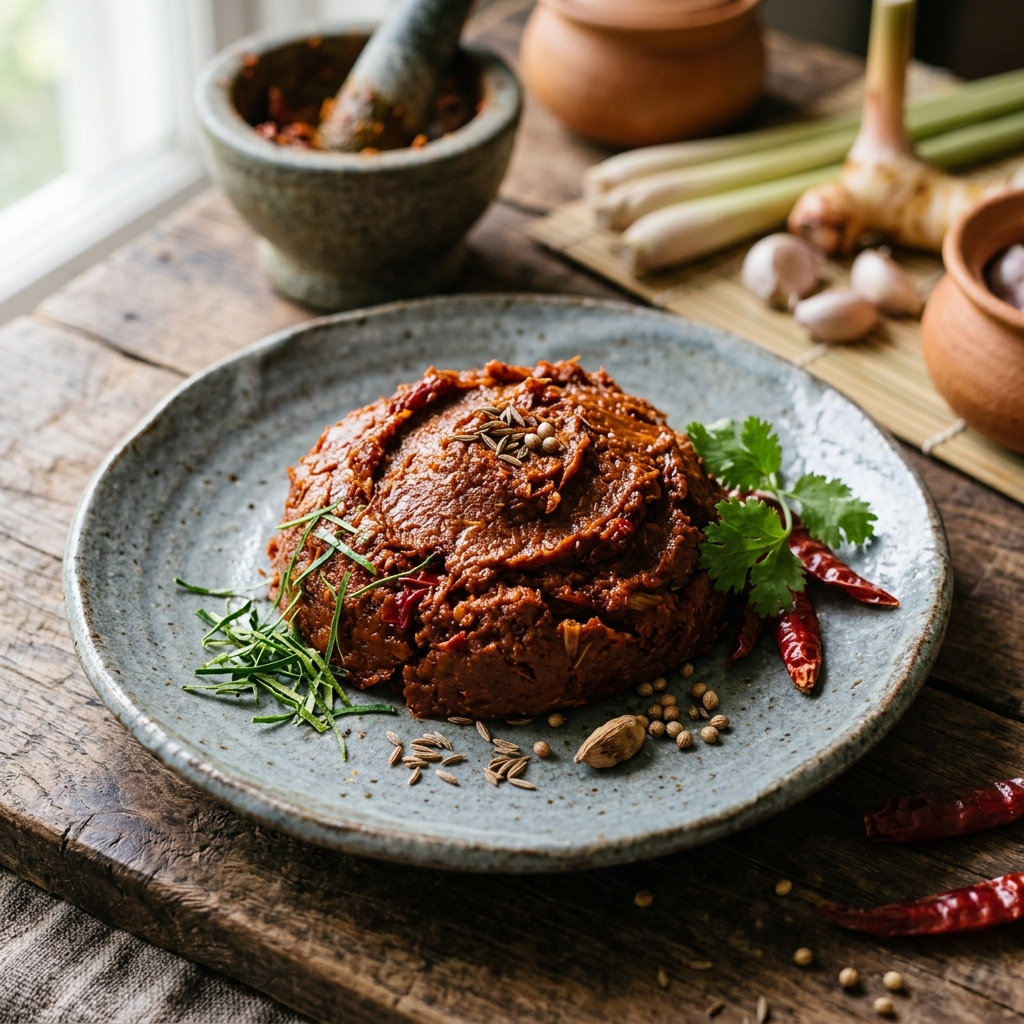
A rich, aromatic Thai curry paste with dried chilies, lemongrass, galangal, and warm whole spices, pounded into a concentrated base for creamy Panang curry. This version is designed for home cooks while staying close to traditional flavor structure.
Ingredients
- dried long red chilies — about 8 to 10 mild dried Thai chilies, stemmed and seeded for a red color with moderate heat20 g
- dried bird's eye chilies — about 6 to 8, stemmed; adjust for heat4 g
- lemongrass — tender lower white part only, thinly sliced35 g
- galangal — peeled and thinly sliced20 g
- makrut lime zest — finely shaved from 1 to 2 makrut limes, avoid bitter white pith2 g
- shallots — peeled and sliced60 g
- garlic — peeled cloves25 g
- coriander seeds — about 1 tablespoon8 g
- cumin seeds — about 1 teaspoon4 g
- white peppercorns — about 1 teaspoon2 g
- roasted peanuts — unsalted; traditional in many Panang-style pastes for body15 g
- shrimp paste — belacan or kapi; wrapped in foil or banana leaf before toasting if desired10 g
- fine salt — about 3/4 teaspoon; helps grinding4 g
Nutrition
Nutrition values are estimates and may vary depending on ingredients and brands.
Instructions
- 1Soak the dried chilies
Place the dried long red chilies and dried bird's eye chilies in a bowl. Cover with 250 millilitres (1 cup) hot water and soak for 15 minutes. Drain well and squeeze gently to remove excess water.
15 minutes Hot water soakCues: The chilies should feel flexible and soft, not brittle, and the soaking water will turn orange-red.Tip: Wear gloves if you have sensitive skin, and keep a few seeds if you want a hotter paste. - 2Toast the dry spices
Set a small dry pan over medium-low heat. Add the coriander seeds, cumin seeds, and white peppercorns. Toast, shaking the pan often, until fragrant and slightly deeper in color, then transfer to a mortar or spice grinder.
2 to 3 minutes Medium-low heatCues: The spices should smell warm and nutty, with a light popping sound from some coriander seeds, but no smoke.Tip: Remove the spices as soon as they are aromatic; burnt spices make the paste bitter. - 3Toast the shrimp paste
Place the shrimp paste in a small piece of foil or on a small square of baking paper in the same pan. Toast briefly until aromatic, then let it cool slightly.
1 to 2 minutes Medium-low heatCues: It should smell savory and mellow rather than harsh, and the surface will look slightly drier.Tip: Turn on the extractor fan or open a window, as shrimp paste has a strong aroma when heated. - 4Grind the spices
Pound the toasted coriander seeds, cumin seeds, and white peppercorns in a mortar and pestle until finely ground. If using a grinder, pulse to a fine powder.
2 minutes No heatCues: The mixture should look sandy and even, with no large whole seeds left.Tip: Starting with the dry spices creates an abrasive base that helps break down the fresh aromatics. - 5Pound the firm aromatics
Add the salt, sliced lemongrass, galangal, and makrut lime zest to the mortar. Pound until the fibers break down into a rough paste.
5 to 7 minutes No heatCues: The mixture should change from chunky slices to a moist, fibrous mash with a strong citrusy aroma.Tip: Slice the lemongrass and galangal as thinly as possible to make pounding easier. - 6Add the softer ingredients
Add the shallots, garlic, soaked chilies, and roasted peanuts. Pound steadily, scraping the sides as needed, until the mixture becomes a smooth, cohesive red paste.
8 to 10 minutes No heatCues: The paste should be thick, moist, and spreadable, with only tiny visible flecks of chili skin and no large chunks of shallot.Tip: Add the ingredients in batches if your mortar is small so the paste grinds evenly. - 7Finish with shrimp paste
Add the toasted shrimp paste and pound again until fully incorporated and the paste is uniform in color and texture.
1 to 2 minutes No heatCues: The paste should look glossy, brick red to deep rust-colored, and smell savory, citrusy, and warm-spiced.Tip: If using a food processor instead of a mortar, pulse in short bursts and scrape down frequently to avoid a watery paste. - 8Use or store
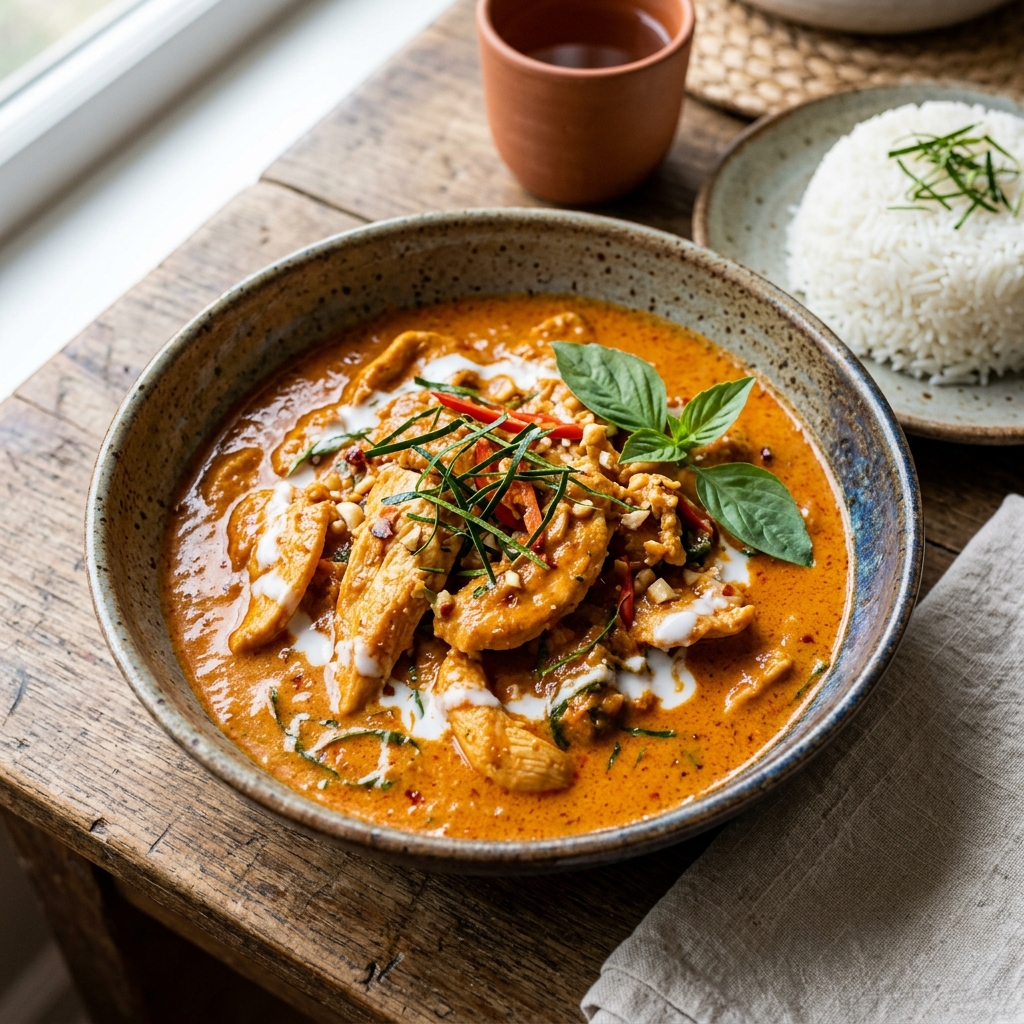
Use about 45 to 60 grams (3 to 4 tablespoons) of paste for a curry serving 3 to 4 people, frying it first in thick coconut cream until fragrant and slightly oily before adding other ingredients.
Immediate use or storage As needed for cookingCues: When fried correctly, the paste will smell sweeter and richer, and small beads of red oil may appear around the edges.Tip: Portion the paste before storing so you can thaw only what you need.
Chef tips
- A mortar and pestle gives the most traditional texture and releases aromatic oils better than a blender.
- For the brightest red paste, use mostly mild dried red chilies and only a few hot chilies for heat.
- If the paste is too dry to move in a food processor, add 5 to 10 millilitres (1 to 2 teaspoons) of the chili soaking water, but use as little as possible.
Cooking video
No cooking video available yet.
Cook this dish safely
Follow safe food-handling practices — keep raw and ready-to-eat foods separate, cook applicable foods thoroughly, and refrigerate perishable foods promptly.
Cook chicken, turkey and other poultry to an internal temperature of 165°F / 74°C at the thickest part (a food thermometer is the only reliable way to check). Rinsing raw poultry is not recommended — it splashes bacteria around the sink. Sanitize any cutting boards, knives and hands that touched the raw bird before they touch anything else.
Cook fish to 145°F / 63°C, or until the flesh is opaque and separates easily. Shrimp, lobster, scallops and crab should turn opaque and firm; clams, mussels and oysters should open (discard any that stay shut). Keep raw seafood refrigerated until you're ready to cook.
Keep milk, cream, cheese and yogurt at or below 40°F / 4°C. Once served, never leave perishables at room temperature longer than 2 hours (1 hour above 90°F / 32°C). Any leftover dairy-based sauce or custard is safest eaten within 3-4 days.
Use separate cutting boards and utensils for raw animal protein and for anything you'll eat raw (salad, garnish, herbs). Wash hands, knife and board thoroughly with hot soapy water between steps.
Refrigerate any leftovers within 2 hours of cooking, in shallow airtight containers, and eat within 3-4 days. Reheat to steaming hot (165°F / 74°C) before serving. Freeze portions you won't eat in that window.
This list is based on the recipe's ingredients. Cross-contact during preparation or shared kitchens may still introduce allergens — always check individual products.