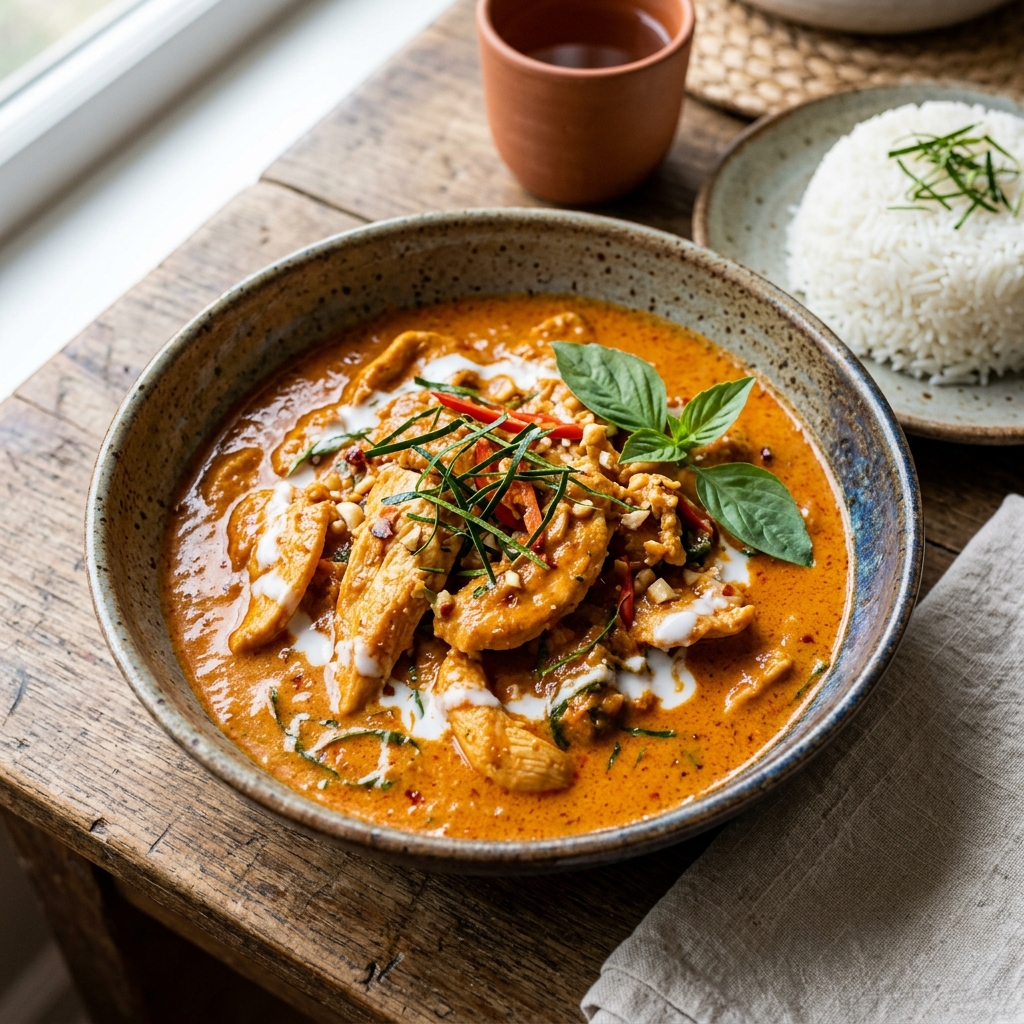
Panang Curry with Chicken and Kaffir Lime
A rich, gently sweet Thai curry with tender slices of chicken in a thick coconut sauce scented with kaffir lime and sweet basil. This version keeps the texture tighter and less soupy than red curry, true to the character of classic Panang.
Ingredients
- Boneless skinless chicken thigh — Thinly sliced into bite-size pieces500 g
- Coconut cream — For frying the curry paste; use the thick top portion if using canned coconut milk250 ml
- Coconut milk — Full-fat400 ml
- Panang curry paste — Preferably Thai-style, adjust slightly to taste70 g
- Palm sugar — About 1 tablespoon, finely chopped if firm20 g
- Fish sauce — About 2 tablespoons30 ml
- Kaffir lime leaves — 2 leaves finely shredded, 2 leaves lightly torn4 whole
- Thai sweet basil leaves — About 1 loosely packed cup15 g
- Red spur chili — Thinly sliced for garnish, optional1 whole
- Neutral oil — About 2 teaspoons, only if the coconut cream does not split easily10 ml
- Jasmine rice — Cooked separately, for serving300 g
Nutrition
Nutrition values are estimates and may vary depending on ingredients and brands.
Instructions
- 1Prepare the aromatics and chicken
Slice the chicken thighs thinly across the grain. Stack 2 kaffir lime leaves, remove the center rib, roll them tightly, and shred into very fine strips. Lightly tear the remaining 2 leaves.
5 minutes Room temperatureCues: The chicken slices should be thin enough to cook quickly and the shredded lime leaf should look like fine green threads.Tip: Thin slicing helps the chicken stay tender and lets the sauce coat every piece evenly. - 2Reduce the coconut cream
Place a wok or wide sauté pan over medium heat. Add the coconut cream and cook, stirring often, until it thickens and looks glossy. If it remains smooth and refuses to release oil after 3 to 4 minutes, add the neutral oil.
4 minutes Medium heatCues: The cream should go from fluid white to thicker and shinier, with small beads of oil appearing around the edges.Tip: This step blooms the curry paste in fat, which gives the finished curry a deeper aroma. - 3Fry the curry paste
Add the Panang curry paste to the reduced coconut cream. Stir and press it into the pan so it fries evenly until fragrant.
2 to 3 minutes Medium heatCues: The paste should darken slightly, smell intensely aromatic, and leave a light red oil sheen on the surface.Tip: Keep stirring so the paste fries without scorching; scorched paste tastes bitter. - 4Build the curry sauce
Pour in the coconut milk gradually while stirring to dissolve the paste into a smooth sauce. Add the palm sugar, fish sauce, and the 2 torn kaffir lime leaves.
2 minutes Medium heatCues: The sauce should become smooth, reddish-tan, and lightly bubbling around the edge, not boiling hard.Tip: Adding the coconut milk gradually helps keep the sauce silky rather than lumpy. - 5Cook the chicken gently
Add the sliced chicken and spread it out in the sauce. Simmer gently, stirring once or twice, until the chicken is just cooked through.
6 to 8 minutes Medium-low heatCues: The chicken should turn opaque and feel springy when pressed; the thickest piece should reach 74°C.Tip: Avoid a rolling boil, which can tighten the chicken and make the coconut sauce split too aggressively. - 6Finish with lime leaf and basil
Remove the torn lime leaves if you prefer a smoother finish, or leave them in. Stir in the shredded kaffir lime leaves and most of the sweet basil, saving a few leaves for garnish.
1 minute Low heatCues: The basil should just wilt and turn glossy, and the curry should smell sweet, savory, and citrusy.Tip: Adding the shredded lime leaf at the end preserves its fresh perfume. - 7Adjust and serve
Taste the curry and adjust with a little more fish sauce for saltiness or a little more palm sugar for roundness if needed. Spoon over hot jasmine rice and garnish with the remaining basil and sliced red chili if using.
2 minutes WarmCues: The final curry should be thick enough to coat a spoon and sit neatly over rice rather than spread like a soup.Tip: Panang curry is traditionally thicker than many other Thai curries, so let it reduce for 1 to 2 extra minutes if it looks too loose.
Chef tips
- Chicken thigh stays juicier than breast and is more traditional for a rich coconut curry.
- If your curry paste is very salty, start with 20 ml fish sauce and adjust at the end.
- For the best texture, use a wide pan so the curry reduces to a thick, concentrated consistency.
Cooking video
No cooking video available yet.
Cook this dish safely
Follow safe food-handling practices — keep raw and ready-to-eat foods separate, cook applicable foods thoroughly, and refrigerate perishable foods promptly.
Cook chicken, turkey and other poultry to an internal temperature of 165°F / 74°C at the thickest part (a food thermometer is the only reliable way to check). Rinsing raw poultry is not recommended — it splashes bacteria around the sink. Sanitize any cutting boards, knives and hands that touched the raw bird before they touch anything else.
Cook fish to 145°F / 63°C, or until the flesh is opaque and separates easily. Shrimp, lobster, scallops and crab should turn opaque and firm; clams, mussels and oysters should open (discard any that stay shut). Keep raw seafood refrigerated until you're ready to cook.
Keep milk, cream, cheese and yogurt at or below 40°F / 4°C. Once served, never leave perishables at room temperature longer than 2 hours (1 hour above 90°F / 32°C). Any leftover dairy-based sauce or custard is safest eaten within 3-4 days.
Use separate cutting boards and utensils for raw animal protein and for anything you'll eat raw (salad, garnish, herbs). Wash hands, knife and board thoroughly with hot soapy water between steps.
Refrigerate any leftovers within 2 hours of cooking, in shallow airtight containers, and eat within 3-4 days. Reheat to steaming hot (165°F / 74°C) before serving. Freeze portions you won't eat in that window.
This list is based on the recipe's ingredients. Cross-contact during preparation or shared kitchens may still introduce allergens — always check individual products.
You may also love
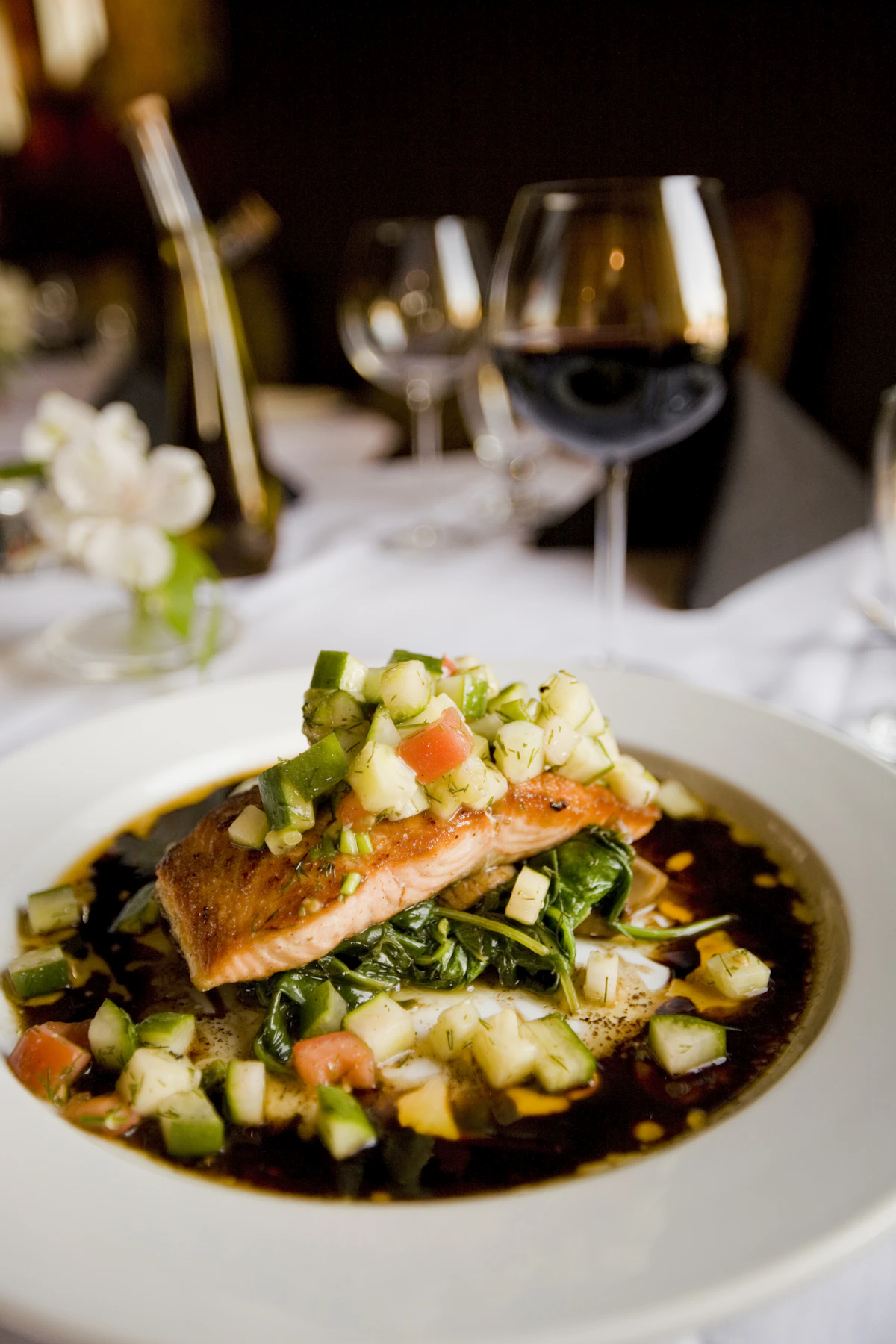 Chef Pick
Miso Glazed Salmon
 Chef Pick
Japanese Garlic Fried Rice
 Chef Pick
Quick Work Veg Noodles

Classic Jeonju-Style Bibimbap

Classic Murgh Makhani (Butter Chicken)