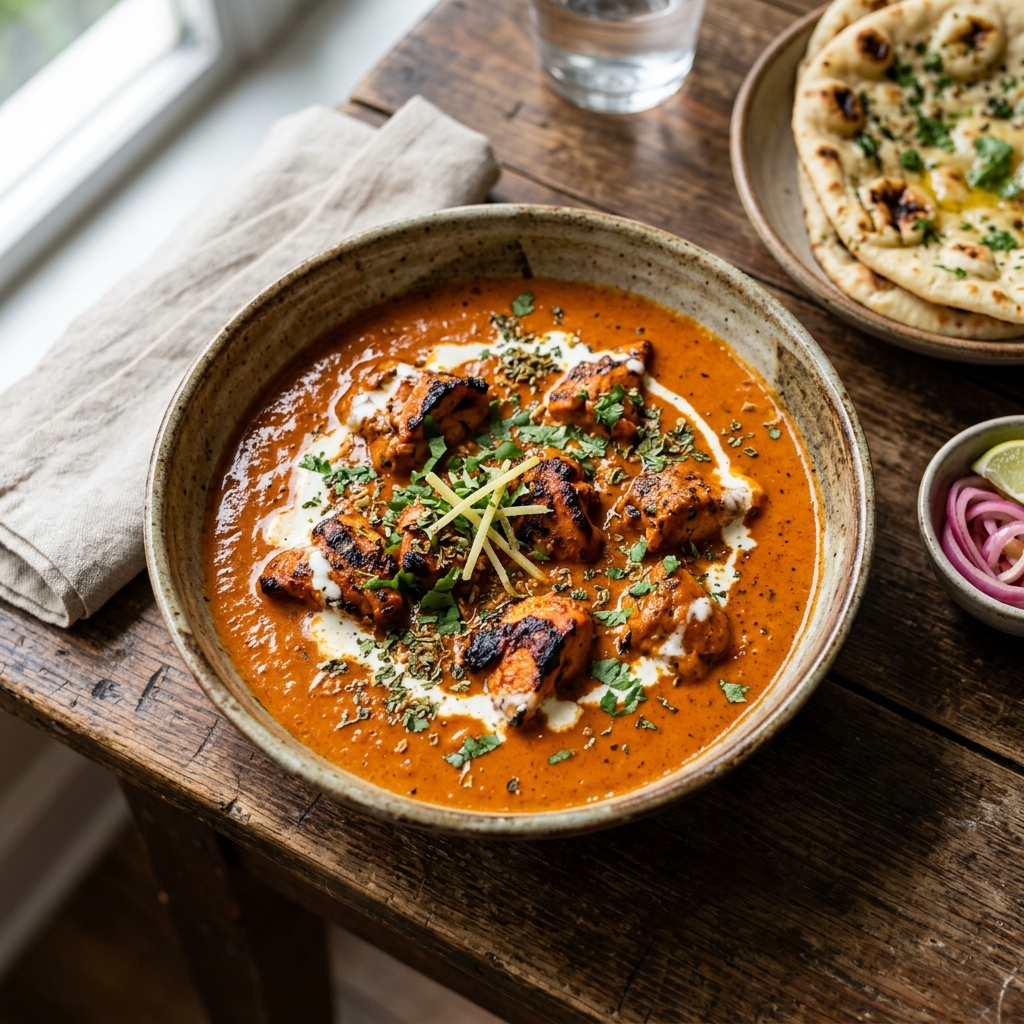
Classic Jeonju-Style Bibimbap
A vibrant, harmonious Korean mixed rice bowl featuring individually seasoned vegetables, savory marinated beef, and a spicy-sweet gochujang sauce, crowned with a perfectly fried egg.
Ingredients
- Short-grain white rice — Rinsed well and cooked according to package instructions.300g (1.5 cups)
- Beef ribeye or sirloin — Very thinly sliced against the grain.150g (5.5 oz)
- Soy sauce — For the beef marinade.30ml (2 tbsp)
- Toasted sesame oil — Divided for marinades, vegetables, and the sauce.45ml (3 tbsp)
- Garlic — Finely minced, divided.15g (3 cloves)
- Granulated sugar — Divided between the beef marinade and gochujang sauce.15g (1 tbsp)
- Fresh spinach — Washed well, stems slightly trimmed.150g (5.5 oz)
- Soybean sprouts (Kongnamul) — Washed and picked over.150g (5.5 oz)
- Carrot — Peeled and cut into thin matchsticks (julienned).100g (1 medium)
- Zucchini — Cut into thin matchsticks, core discarded if too watery.100g (1 small)
- Shiitake mushrooms — Fresh, stems removed, thinly sliced.100g (about 4-5 caps)
- Gochujang (Korean chili paste) — Adjust quantity based on your spice tolerance.45g (3 tbsp)
- Eggs — For the sunny-side-up topping.2 large
- Toasted sesame seeds — For garnish.10g (1 tbsp)
- Salt — Fine sea salt, for seasoning vegetables.5g (1 tsp)
- Neutral cooking oil — Such as canola or grapeseed oil, for sautéing.30ml (2 tbsp)
Nutrition
Nutrition values are estimates and may vary depending on ingredients and brands.
Instructions
- 1Marinate the Beef
In a small bowl, combine the thinly sliced beef with the soy sauce, 15ml (1 tbsp) sesame oil, half the minced garlic, and 7g (0.5 tbsp) sugar. Toss well and let it rest at room temperature while you prepare the vegetables.
15 minutes Room temperatureCues: The meat will absorb the dark marinade and smell intensely of sweet soy and garlic.Tip: Partially freezing the beef for 30 minutes before slicing makes it much easier to get paper-thin strips. - 2Blanch the Sprouts and Spinach
Bring a medium pot of salted water to a boil. Add the soybean sprouts and boil gently. Remove with a slotted spoon and rinse under cold water. In the same boiling water, add the spinach for just 30 seconds. Drain and rinse under cold water. Squeeze out as much excess water from the spinach as possible.
5-6 minutes High heat (Boiling)Cues: Sprouts should be slightly translucent but still crunchy; spinach will turn a vibrant, dark green and wilt completely.Tip: Squeezing the spinach prevents a watery bibimbap bowl. - 3Season the Blanched Vegetables
Place the squeezed spinach in one small bowl and the cooled sprouts in another. Season each bowl with a pinch of salt, a pinch of minced garlic, and 2.5ml (0.5 tsp) of sesame oil. Toss each gently to coat.
2 minutes Room temperatureCues: The vegetables will look glossy from the oil and emit a nutty, toasted sesame aroma.Tip: Keep all prepared vegetables separate to maintain their distinct colors for presentation. - 4Sauté the Raw Vegetables
Heat a heavy skillet over medium-high heat. Add a splash of neutral oil. Sauté the carrots with a pinch of salt until slightly softened. Remove to a plate. Wipe the skillet, add a little more oil, and sauté the zucchini with a pinch of salt. Remove to the plate. Finally, sauté the mushrooms with a pinch of salt until they release their moisture and brown slightly.
8-10 minutes Medium-High heatCues: Carrots will deepen in color and bend slightly; zucchini will turn bright green and tender-crisp; mushrooms will shrink by half and smell deeply earthy.Tip: Cooking vegetables individually prevents their colors and flavors from bleeding into one another. - 5Cook the Beef
In the same skillet over high heat, add the marinated beef in a single layer. Cook, stirring frequently, until the liquid evaporates and the beef edges begin to caramelize.
3-4 minutes High heatCues: The beef will turn dark brown, with no pink remaining, and the pan will sizzle loudly as the marinade reduces into a sticky glaze.Tip: Do not overcrowd the pan; you want the beef to sear, not steam. - 6Prepare the Bibimbap Sauce
In a small bowl, mix the gochujang, remaining 7g (0.5 tbsp) sugar, 15ml (1 tbsp) sesame oil, and 15ml (1 tbsp) of warm water to thin it out to a mixing consistency.
2 minutes Room temperatureCues: The sauce should be thick but pourable, resembling the consistency of ketchup, glossy and dark red.Tip: If you like a tangier sauce, substitute the warm water with rice vinegar. - 7Fry the Eggs
Heat a non-stick pan over medium heat with a little neutral oil. Crack the eggs into the pan and fry sunny-side up.
3 minutes Medium heatCues: The egg whites will turn completely opaque with slightly crispy edges, while the yolk remains a vibrant, jiggly liquid.Tip: The runny yolk is essential as it acts as a secondary, rich sauce when mixed into the rice. - 8Assemble the Bibimbap
Divide the hot cooked rice into two large serving bowls. Arrange the prepared vegetables and cooked beef in neat, alternating color sections around the perimeter of the rice. Place the fried egg in the center. Drizzle the gochujang sauce over the top, sprinkle with toasted sesame seeds, and serve immediately.
3 minutes Serve immediatelyCues: A visually striking bowl resembling a color wheel, steaming gently from the hot rice underneath.Tip: Instruct your guests to aggressively mix everything together with a spoon before taking their first bite!
Chef tips
- Mise en place is critical here. Have all your vegetables chopped and blanched before you start sautéing to make the cooking process smooth.
- For an authentic 'Dolsot' (hot stone) experience at home, heat a cast-iron skillet, coat with sesame oil, press the assembled rice and toppings into it, and heat until the bottom crisps up.
- Always serve the gochujang sauce slightly on the side so guests can adjust the spice level to their preference.
Cooking video
No cooking video available yet.
Cook this dish safely
Follow safe food-handling practices — keep raw and ready-to-eat foods separate, cook applicable foods thoroughly, and refrigerate perishable foods promptly.
- This recipe contains raw or undercooked eggs.
Cook chicken, turkey and other poultry to an internal temperature of 165°F / 74°C at the thickest part (a food thermometer is the only reliable way to check). Rinsing raw poultry is not recommended — it splashes bacteria around the sink. Sanitize any cutting boards, knives and hands that touched the raw bird before they touch anything else.
Cook ground beef, pork, lamb or veal to at least 160°F / 71°C at the centre. Grinding mixes surface bacteria through the whole patty/meatball, so a still-pink centre is a real risk — not just an aesthetic issue.
This recipe uses eggs that aren't fully cooked. Use pasteurized eggs whenever possible — they're safe to eat raw. Otherwise, buy the freshest Grade A eggs, keep them at or below 40°F / 4°C, and serve the dish the day you make it. Not recommended for pregnant, elderly, very young or immunocompromised diners.
Use separate cutting boards and utensils for raw animal protein and for anything you'll eat raw (salad, garnish, herbs). Wash hands, knife and board thoroughly with hot soapy water between steps.
Refrigerate any leftovers within 2 hours of cooking, in shallow airtight containers, and eat within 3-4 days. Reheat to steaming hot (165°F / 74°C) before serving. Freeze portions you won't eat in that window.
This list is based on the recipe's ingredients. Cross-contact during preparation or shared kitchens may still introduce allergens — always check individual products.
You may also love
 Chef Pick
Miso Glazed Salmon
 Chef Pick
Japanese Garlic Fried Rice
 Chef Pick
Quick Work Veg Noodles

Classic Murgh Makhani (Butter Chicken)
Classic Hong Kong Cha Chaan Teng Fried Rice