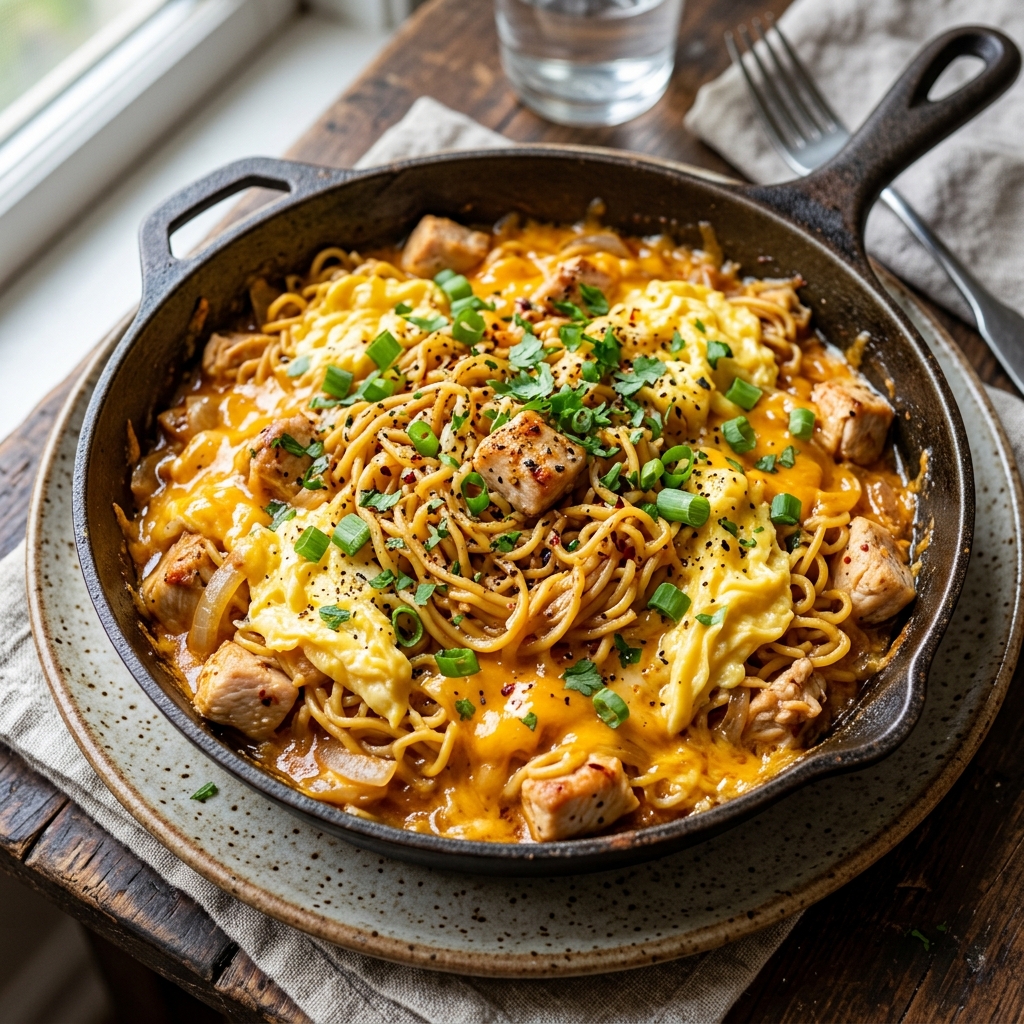
Cheesy Chicken Maggi Skillet with Soft Scrambled Egg
This fast, comforting skillet turns instant noodles into a hearty one-pan meal with juicy chicken, sweet sautéed onion, ribbons of soft egg, and a glossy cheese-coated sauce. The flavor is savory and slightly peppery, with rich melted cheese binding everything together. It cooks quickly in one pan and delivers a creamy, slurpable texture with golden bits of chicken for contrast.
Ingredients
- instant Maggi noodles140 g (2 standard packs), keep noodle cakes whole at first; reserve tastemaker sachets
- boneless chicken250 g, cut into small bite-size pieces, about 2 cm; patted dry
- onion120 g (1 medium), thinly sliced, about 3 mm thick
- egg2 large, beaten until smooth
- cheese100 g (about 1 cup loosely packed), grated or finely chopped for quick melting
- neutral oil15 ml (1 tbsp)
- water450 ml (about 1 3/4 cups)
- black pepper1 g (1/2 tsp), freshly ground if possible
Instructions
- 1Prep the ingredients
Slice the onion, cut the chicken into small even pieces, beat the eggs in a bowl, and grate the cheese. Open the Maggi packs and keep the noodle cakes and tastemaker sachets ready beside the stove.
5-7 min offCues: Everything should be measured and within reach before cooking starts.Tip: Small chicken pieces cook quickly and stay tender in a fast noodle dish. - 2Sauté the onion
Heat a wide pan or skillet over medium heat and add the oil. Add the sliced onion and cook, stirring often, until it softens and turns light golden at the edges.
3-4 min mediumCues: The onion should smell sweet, look glossy, and lose its raw sharpness.Tip: A wide pan helps the onion brown instead of steam. - 3Cook the chicken
Add the chicken to the pan in a single layer and sprinkle in half of the tastemaker from the Maggi sachets. Cook, stirring every 30 seconds, until the chicken turns opaque and gets light golden spots.
4-5 min medium-highCues: The chicken should change from pink to white all the way through, feel firm when pressed, and have a lightly browned surface.Tip: Seasoning the chicken early builds flavor into the whole dish. - 4Add the water and noodles
Pour in the water and scrape the bottom of the pan to release any flavorful browned bits. Add the noodle cakes and the remaining tastemaker, then gently press the noodles down so they start to soften in the liquid.
1 min medium-highCues: The liquid should come to a steady simmer with small active bubbles around the noodles.Tip: Keeping the noodles mostly intact at first prevents them from breaking into very short pieces. - 5Simmer the noodles
Cook the noodles, gently separating them with tongs or a fork after the first minute. Simmer until the noodles are just tender and there is still a little glossy liquid left in the pan.
2-3 min mediumCues: The noodles should bend easily without a hard center, and the pan should still have a few tablespoons of starchy liquid.Tip: That small amount of liquid helps the cheese melt into a smooth sauce. - 6Add the egg
Lower the heat and drizzle in the beaten egg while gently stirring the noodles. Keep folding for a short time so the egg forms soft ribbons and lightly coats the noodles rather than setting into large dry chunks.
1-2 min lowCues: The egg should look softly set, silky, and no longer runny, with small tender curds clinging to the noodles.Tip: Slow stirring gives a creamier result, almost like a quick carbonara-style finish. - 7Melt in the cheese
Add the grated cheese and black pepper, then toss everything until the cheese fully melts into the noodles. If the mixture looks too thick, add 15-30 ml (1-2 tbsp) water and stir until glossy.
1-2 min lowCues: The noodles should look shiny and lightly creamy, with the cheese fully melted and stretching slightly when lifted.Tip: Adding cheese on low heat keeps the sauce smooth. - 8Rest and serve
Turn off the heat and let the skillet stand for 1 minute so the sauce settles and clings to the noodles. Taste and adjust with a little extra pepper if you like, then divide between two bowls.
1 min offCues: The noodles should be creamy and cohesive, not watery, and the chicken should be juicy and tender.Tip: A short rest makes instant noodles feel more luxurious and less brothy.
Chef tips
- Patting the chicken dry helps it brown faster and prevents the pan from steaming.
- Reserve a little cooking liquid before the final mix if you want full control over the sauce texture.
- Grate the cheese finely so it melts quickly and evenly into the hot noodles.
- Use low heat for the egg and cheese stages to keep the texture creamy rather than tight and dry.
- A wide skillet gives better evaporation and a silkier noodle coating than a deep pot.
Cooking video
No cooking video available yet.
Cook this dish safely
Follow safe food-handling practices — keep raw and ready-to-eat foods separate, cook applicable foods thoroughly, and refrigerate perishable foods promptly.
- This recipe contains raw or undercooked eggs.
Cook chicken, turkey and other poultry to an internal temperature of 165°F / 74°C at the thickest part (a food thermometer is the only reliable way to check). Rinsing raw poultry is not recommended — it splashes bacteria around the sink. Sanitize any cutting boards, knives and hands that touched the raw bird before they touch anything else.
This recipe uses eggs that aren't fully cooked. Use pasteurized eggs whenever possible — they're safe to eat raw. Otherwise, buy the freshest Grade A eggs, keep them at or below 40°F / 4°C, and serve the dish the day you make it. Not recommended for pregnant, elderly, very young or immunocompromised diners.
Keep milk, cream, cheese and yogurt at or below 40°F / 4°C. Once served, never leave perishables at room temperature longer than 2 hours (1 hour above 90°F / 32°C). Any leftover dairy-based sauce or custard is safest eaten within 3-4 days.
Use separate cutting boards and utensils for raw animal protein and for anything you'll eat raw (salad, garnish, herbs). Wash hands, knife and board thoroughly with hot soapy water between steps.
Refrigerate any leftovers within 2 hours of cooking, in shallow airtight containers, and eat within 3-4 days. Reheat to steaming hot (165°F / 74°C) before serving. Freeze portions you won't eat in that window.
This list is based on the recipe's ingredients. Cross-contact during preparation or shared kitchens may still introduce allergens — always check individual products.
You may also love
 Chef Pick
Miso Glazed Salmon
 Chef Pick
Japanese Garlic Fried Rice
 Chef Pick
Quick Work Veg Noodles

Classic Jeonju-Style Bibimbap

Classic Murgh Makhani (Butter Chicken)