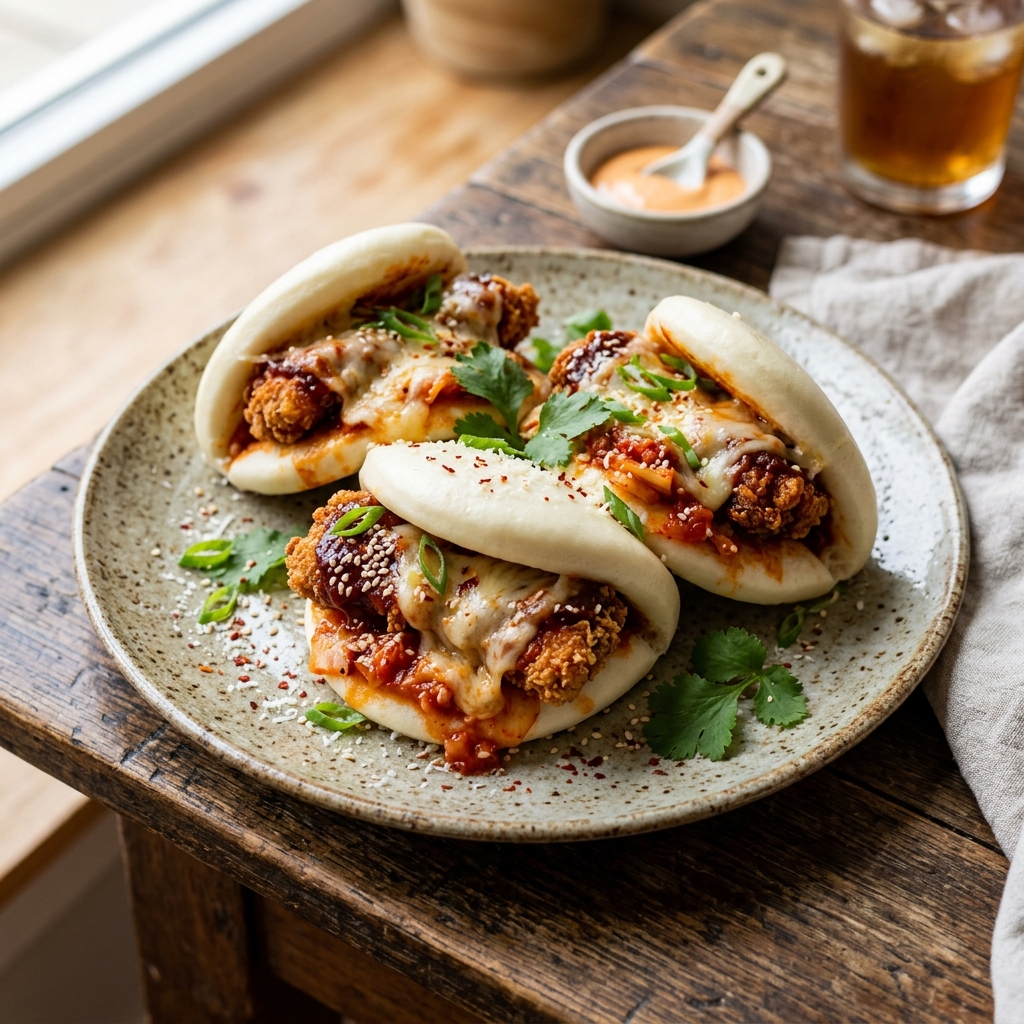
Gochujang Chicken Parm Bao Melts
Pillowy bao buns are filled with crisp gochujang-marinated chicken, quick kimchi-tomato sauce, and melted mozzarella for a playful Korean-Italian mash-up that is comforting and bold.
Ingredients
- bao buns — steamed style, about 50 to 60 g each8 pieces
- boneless chicken thighs — cut into 2 cm strips500 g
- gochujang — about 2 1/2 tbsp45 g
- soy sauce — about 2 tbsp30 ml
- garlic — 4 cloves, finely grated12 g
- ginger — finely grated10 g
- honey — about 1 tbsp15 ml
- black pepper — about 1/2 tsp1 g
- cornstarch — about 3 tbsp25 g
- neutral oil — for pan-frying45 ml
- kimchi — roughly chopped120 g
- tomato passata — smooth tomato puree200 ml
- olive oil — about 1 tbsp15 ml
- dried oregano — about 1 tsp1 g
- mozzarella — low-moisture, shredded180 g
- Parmigiano-Reggiano — finely grated40 g
- spring onions — thinly sliced20 g
- fresh basil — torn, optional but recommended10 g
- salt — or to taste, divided3 g
Nutrition
Nutrition values are estimates and may vary depending on ingredients and brands.
Instructions
- 1Marinate the chicken
In a bowl, mix gochujang, soy sauce, half the garlic, all the ginger, honey, black pepper, and 1 g salt. Add the chicken and coat well. Let it sit for 15 minutes while you prepare the sauce.
15 minutes Room temperatureCues: The chicken should be evenly glossy red and smell savory, garlicky, and slightly sweet.Tip: A short marinade is enough because gochujang and soy are strong, and small chicken strips absorb flavor quickly. - 2Make the kimchi-tomato sauce
Heat olive oil in a small pan. Add the remaining garlic and cook for 20 to 30 seconds, stirring, until fragrant but not browned. Add kimchi and oregano; cook for 2 minutes. Pour in the passata and add 1 g salt. Simmer gently, stirring occasionally, until slightly thickened.
8 minutes Medium heat, then low simmerCues: The sauce should bubble lazily, smell tangy and savory, and leave a brief trail when you drag a spoon across the pan.Tip: If your kimchi is very juicy, simmer 1 to 2 minutes longer so the bao do not get soggy. - 3Coat the chicken
Sprinkle cornstarch over the marinated chicken and toss until each piece has a thin, sticky coating.
2 minutes No heatCues: The chicken should look lightly pasty rather than dusty, with no pools of dry starch at the bottom of the bowl.Tip: This light coating helps the chicken brown and gives the sauce something to cling to. - 4Cook the chicken
Heat neutral oil in a large frying pan. Add the chicken in a single layer and cook, turning every 2 minutes, until browned in spots and fully cooked through.
8 to 10 minutes Medium to medium-high heatCues: The edges should caramelize, the center should no longer look translucent, and the thickest pieces should reach 74°C internally.Tip: Do not overcrowd the pan; cook in two batches if needed so the chicken sears instead of steams. - 5Steam the bao
Steam the bao buns according to their style and size, usually in a steamer basket over simmering water, until hot and soft.
4 to 6 minutes Steaming over simmering waterCues: The bao should feel fluffy, spring back lightly when pressed, and be hot in the center without becoming wet on the surface.Tip: Line the steamer with parchment or cabbage leaves to prevent sticking. - 6Fill and melt
Split or gently open each bao. Spoon 1 to 1 1/2 tbsp kimchi-tomato sauce inside, add chicken, then top with mozzarella and Parmigiano-Reggiano. Arrange on a tray or in a covered pan-safe dish and melt the cheese using a broiler or by covering the pan briefly.
2 to 4 minutes Broiler on high or covered pan over low heatCues: The mozzarella should be melted and stretchy, and the Parmigiano should look moist and slightly golden at the edges.Tip: Keep the cheese mostly inside the bao so it melts onto the chicken instead of spilling away. - 7Finish and serve
Top with spring onions and basil, then serve immediately.
1 minute WarmCues: The finished bao should smell spicy, cheesy, and fresh, with soft buns and hot filling.Tip: A tiny extra spoon of sauce on top adds shine, but use it sparingly to keep the buns light.
Chef tips
- Use low-moisture mozzarella for better melt and less wateriness.
- Chicken thigh stays juicier than breast and is more forgiving for beginner cooks.
- If you want more heat, add 5 ml (1 tsp) kimchi juice to the sauce rather than extra salt.
- For crisp edges, let the cooked chicken rest in the pan for 30 seconds before turning.
Cooking video
No cooking video available yet.
Cook this dish safely
Follow safe food-handling practices — keep raw and ready-to-eat foods separate, cook applicable foods thoroughly, and refrigerate perishable foods promptly.
Cook chicken, turkey and other poultry to an internal temperature of 165°F / 74°C at the thickest part (a food thermometer is the only reliable way to check). Rinsing raw poultry is not recommended — it splashes bacteria around the sink. Sanitize any cutting boards, knives and hands that touched the raw bird before they touch anything else.
Cook egg dishes until both the white and yolk are firm, or to 160°F / 71°C for custards, quiches and casseroles. Store eggs in the coldest part of the fridge, not the door.
Keep milk, cream, cheese and yogurt at or below 40°F / 4°C. Once served, never leave perishables at room temperature longer than 2 hours (1 hour above 90°F / 32°C). Any leftover dairy-based sauce or custard is safest eaten within 3-4 days.
Use separate cutting boards and utensils for raw animal protein and for anything you'll eat raw (salad, garnish, herbs). Wash hands, knife and board thoroughly with hot soapy water between steps.
Refrigerate any leftovers within 2 hours of cooking, in shallow airtight containers, and eat within 3-4 days. Reheat to steaming hot (165°F / 74°C) before serving. Freeze portions you won't eat in that window.
This list is based on the recipe's ingredients. Cross-contact during preparation or shared kitchens may still introduce allergens — always check individual products.
You may also love
 Chef Pick
Miso Glazed Salmon
 Chef Pick
Japanese Garlic Fried Rice
 Chef Pick
Quick Work Veg Noodles

Classic Jeonju-Style Bibimbap

Classic Murgh Makhani (Butter Chicken)