Classic Chicken Teriyaki
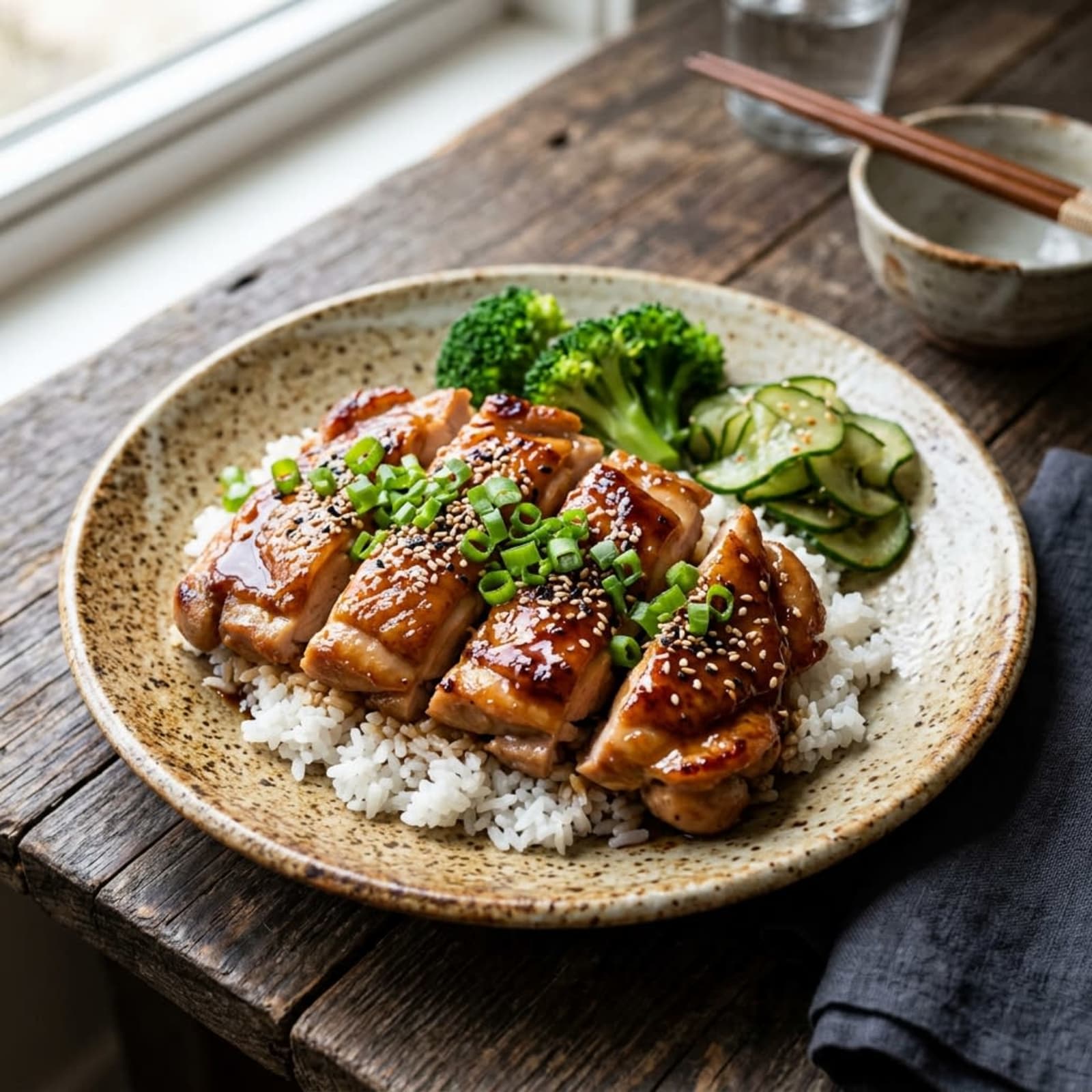
Juicy pan-glazed chicken coated in a glossy sweet-salty teriyaki sauce, finished with a clean shine and gentle caramelization. This version keeps the flavors focused and approachable while delivering a restaurant-style result at home.

Ingredients
- Boneless skin-on chicken thighs — about 6 thighs; skin-on gives the best traditional texture and flavor700 g
- Soy sauce — Japanese soy sauce preferred80 ml
- Mirin — sweet rice wine80 ml
- Sake — or cooking sake80 ml
- Sugar — about 2 tablespoons; white sugar preferred for a clear glaze24 g
- Neutral oil — about 2 teaspoons; use only if the pan needs it10 ml
- Fresh ginger — thinly sliced; optional but common in home-style versions10 g
- Spring onion — thinly sliced, for garnish; optional20 g
- Cooked Japanese short-grain rice — for serving; optional600 g
Nutrition
Nutrition values are estimates and may vary depending on ingredients and brands.
Instructions
- 1Prepare the sauce
In a bowl, mix the soy sauce, mirin, sake, and sugar until the sugar is mostly dissolved. Add the sliced ginger if using.
2 minutesTip: Mix the sauce before heating so the sugar dissolves evenly and the glaze reduces smoothly. - 2Trim and season the chicken lightly
Pat the chicken thighs dry with paper towels and trim any large loose flaps of fat. Do not add salt, as the soy sauce provides enough seasoning.
3 minutesTip: Drying the chicken well is one of the easiest ways to improve color and reduce splattering. - 3Sear the chicken skin-side down
Heat a large frying pan over medium heat. Add the oil only if the pan is dry. Place the chicken skin-side down and cook without moving it so the skin browns and fat renders.
6 to 8 minutes medium heatTip: If too much fat collects in the pan, carefully spoon off most of it so the chicken sears instead of shallow-frying. - 4Cook the second side
Turn the chicken over and cook on the second side until the meat firms up and the center is nearly cooked through.
4 to 5 minutesTip: The chicken will finish cooking in the sauce, so avoid overcooking it at this stage. - 5Add and reduce the teriyaki sauce
Pour off excess fat from the pan, leaving about 1 teaspoon. Add the sauce mixture to the pan. Let it come to a lively simmer, then spoon and tilt the pan so the sauce reduces around the chicken.
3 to 5 minutesTip: Watch closely near the end; the sugar can darken quickly once the sauce thickens. - 6Glaze the chicken
Turn the chicken several times in the reduced sauce until each piece is evenly coated. Continue briefly until the thickest part of the chicken reaches 74°C.
1 to 2 minutes 74°CTip: If the sauce becomes too thick, add 15 to 30 ml (1 to 2 tablespoons) water and swirl to loosen it. - 7Slice and serve
Transfer the chicken to a board, rest for 2 minutes, then slice into thick strips. Spoon the remaining glaze over the top and garnish with spring onion if using. Serve with warm rice.
3 minutesTip: Slicing after glazing gives the classic look and helps the sauce coat every piece.
Chef tips
- Skin-on thighs are the easiest cut for a juicy traditional-style result because the rendered fat protects the meat and adds flavor.
- If using chicken breast instead, reduce the second-side cooking time and check carefully for 74°C to avoid dryness.
- A wide pan helps the sauce reduce quickly into a glaze instead of steaming the chicken.
Cooking video
No cooking video available yet.
Chef Munishwar
Chef Munishwar is a professional chef with a focus on Pan-Asian cuisine, particularly Japanese cooking, sushi and Teppanyaki.
Cook this dish safely
Follow safe food-handling practices — keep raw and ready-to-eat foods separate, cook applicable foods thoroughly, and refrigerate perishable foods promptly.
Cook chicken, turkey and other poultry to an internal temperature of 165°F / 74°C at the thickest part (a food thermometer is the only reliable way to check). Rinsing raw poultry is not recommended — it splashes bacteria around the sink. Sanitize any cutting boards, knives and hands that touched the raw bird before they touch anything else.
Use separate cutting boards and utensils for raw animal protein and for anything you'll eat raw (salad, garnish, herbs). Wash hands, knife and board thoroughly with hot soapy water between steps.
Refrigerate any leftovers within 2 hours of cooking, in shallow airtight containers, and eat within 3-4 days. Reheat to steaming hot (165°F / 74°C) before serving. Freeze portions you won't eat in that window.
This list is based on the recipe's ingredients. Cross-contact during preparation or shared kitchens may still introduce allergens — always check individual products.